2023 Share Market Projections: What to Expect in the Coming Months

The dynamics of stock markets are influenced by a complex interplay of various factors, including investor sentiment, economic indicators, geopolitical events, and more. One significant factor that can impact stock markets is the actions and behaviors of foreign institutional investors (FIIs) and domestic institutional investors (DIIs). FIIs and DIIs often play opposing roles in the stock market. FIIs, as the name suggests, are institutional investors from foreign countries who invest in the stock markets of another country, such as India. On the other hand, DIIs represent domestic institutional investors, which include mutual funds, insurance companies, and other financial institutions operating within the country.

The stock market often experiences fluctuations and movements based on the collective actions of these two types of investors. When FIIs are actively selling their positions in the market, it can lead to a negative impact on stock prices and overall market sentiment. Conversely, when DIIs are buying stocks, it can provide support to the market, helping to stabilize or drive up prices. Investors are closely watching these opposing trends in the market, as they are anticipating a period of consolidation in the stock market until December. This period aligns with the announcement of Assembly election results, a time when market participants typically tread cautiously due to the uncertainty that elections can introduce.

Moreover, recent geopolitical tensions have added an extra layer of volatility to the stock market. Geopolitical events, like conflicts or diplomatic developments, can create sudden swings in stock prices and affect market sentiment. The anticipation of this continued volatility reinforces the belief that the market is likely to remain range-bound in the short term. The upcoming festive season in November 2023 and the Assembly elections are critical milestones that investors are monitoring. The performance of the stock market during these periods will be indicative of broader market.

Factors Affecting the Recent Crash in Nifty and Sensex

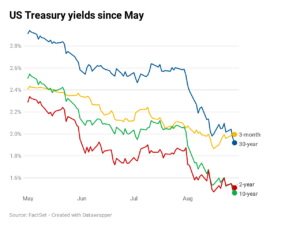
The recent performance of the Indian stock market has been influenced by several factors. Initially, there was buying interest due to the retracement of the 10-year US treasury yield from its 16-year high, briefly falling below 5%. However, the US bond market later saw renewed buying interest, causing the yield to approach 5% once again. Additionally, factors like the Israel-Hamas war, a strong US dollar, selling by Foreign Institutional Investors (FIIs), disappointing Q2 2023 results, and concerns about rising inflation have collectively contributed to the stock market’s decline into the red territory. The stock market downturn, encompassing key indices like NIFTY and Sensex, can be attributed to a multitude of factors, as underscored by financial experts and media reports.

Israel-Palestine Conflict: The Israel-Palestine Conflict has emerged as a pivotal factor in the geopolitical landscape of the Middle East. The ongoing Israel-Hamas war and the deep-rooted tensions have contributed to heightened uncertainty in the region. Beyond its local ramifications, this conflict resonates globally, impacting investor sentiment and market stability. It introduces a complex dynamic, where financial markets are influenced not only by economic factors but also by geopolitical risks. As international news covers developments in the conflict, investors are compelled to reassess their positions, recognizing the potential far-reaching consequences of this enduring issue on economic landscapes worldwide.

US Bond Yields: The surge in US bond yields holds the power to reshape investment dynamics. As these yields rise, they become increasingly appealing in comparison to stocks, encouraging a reallocation of investor capital. This transition towards fixed-income investments has the potential to trigger market fluctuations and downturns. Investors, seeking favourable returns, might shift their focus from equities to bonds, marking a significant pivot in investment strategies. The consequent market declines reflect the intricate relationship between bond yields and stock market performance, a phenomenon subject to ongoing scrutiny by market analysts and investors alike.
Global Economic Uncertainties: Global economic uncertainties exert a substantial influence on the performance of India’s stock markets and key indices. These uncertainties encompass a myriad of concerns, including apprehensions regarding the future trajectory of economic growth and the overall stability of the world economy. It’s crucial to understand that the global economic landscape is highly interconnected, meaning that events in one part of the world can send ripples across India’s financial markets. As a result, these uncertainties have the potential to shape investor sentiment, recalibrate the functioning of the market, and leave their mark on the performance of pivotal stock indices. In this intricate web of economic interdependence, both domestic and international factors intertwine, emphasizing that the state of the global economy can significantly sway the course of India’s markets. It underscores the interwoven nature of the world’s financial systems, where changes in one corner can have far-reaching repercussions, underscoring the need for market participants to navigate these complexities with vigilance and adaptability.

US Dollar Index: The US Dollar Index, which gauges the relative value of the US Dollar compared to foreign currencies, has been consistently above the 106 mark over the past week. Remarkably, this has occurred in the face of the US Federal Reserve’s dovish approach towards raising interest rates. This situation may potentially contribute to the sell-off pressure experienced by equity markets in India. The resilience of the US Dollar, despite the central bank’s cautious stance on interest rate hikes, has introduced a complex dynamic. Investors worldwide are closely observing this scenario as it has raised questions about the impact of the US Dollar’s strength on global financial markets and the potential implications for India’s equity markets.
Profit Booking: Profit booking, a phenomenon where investors decide to sell their stocks to secure their gains, can occasionally trigger short-term market downturns. It’s essential to note that this profit booking tends to transpire when markets are performing well, and investors are sitting on profitable positions. During these periods, investors may decide to cash in on their gains, which can exert a temporary downward pressure on the market. The rationale behind profit booking lies in the desire to safeguard the profits already made, and it often takes place when markets have experienced notable upswings. This dynamic underscores the delicate balance between investor optimism and the need to secure financial gains, which, in turn, can introduce periodic fluctuations in the market.

Crude Oil Prices: The escalating crude oil prices present a notable worry for the Indian stock market, primarily due to the potential for heightened inflation within India. This is particularly concerning if the upward trend in crude oil prices is sustained, which is often influenced by tensions in the Middle East. It’s essential to recognize that India heavily relies on imports for nearly 85 percent of its crude oil demand. Therefore, when crude oil prices rise, it becomes a significant red flag for India’s inflation rate and overall economic stability. This intricate interplay between global oil dynamics and India’s economic landscape underscores the need for vigilant monitoring and strategic measures to mitigate potential adverse effects.

Specific Stock Movements: The individual movements of specific stocks and sectors play a pivotal role in shaping the overall performance of market indices like Sensex. When particular stocks or sectors, like the recent decline in Adani Total shares, experience significant fluctuations, it can send reverberations throughout the broader market indices. These fluctuations are a reflection of the dynamic nature of financial markets, where the fortunes of individual companies or sectors can have a profound impact on the collective market sentiment. As investors react to these specific stock movements, it influences the indices’ overall trajectory, underscoring the intricate interplay between individual stock dynamics and broader market performance.

REFERENCES

https://economictimes.indiatimes.com/

https://www.livemint.com/

https://www.thehindubusinessline.com/

https://www.moneycontrol.com/

Investor Power: India’s Mutual Funds Defy Global Headwinds

The Indian mutual fund industry continues to demonstrate its strength and the unwavering trust of retail investors. Despite global challenges, it remains a resilient and dynamic sector, offering various investment opportunities for individuals and institutions alike.

4 CRORES  DISTINCT  INVESTORS

The Indian mutual fund industry has crossed a significant milestone, with more than 4 Crore (40 million) unique investors actively participating in equity markets through mutual funds. This highlights the increasing engagement of retail investors in the sector, showcasing their growing trust in mutual funds as a preferred investment avenue. It also reflects the impact of financial literacy efforts, long-term wealth creation goals, and regulatory measures that have made investing more accessible and investor-friendly in India’s evolving financial landscape.

HISTORIC SIP CONTRIBUTIONS

September 2023 has etched a historic milestone in the world of finance, with record-breaking contributions to Systematic Investment Plans (SIP) amounting to an impressive ₹16,042.06 crores. This remarkable achievement underscores the unwavering dedication of retail investors, who have shown remarkable faith in SIPs, even amidst global economic uncertainties. Their resolute commitment to long-term financial planning serves as a beacon of confidence and stability in the ever-evolving investment landscape.

A WHOPPING 21% GROWTH  IN AUM

The industry’s Assets Under Management (AUM) experienced a remarkable upswing, surging by a substantial 21%. This outstanding growth not only showcases the sector’s robustness but also underscores its capacity to thrive even in the face of challenging economic circumstances. It’s a testament to the resilience and adaptability of the industry, as it continues to attract and manage a significant volume of assets, reflecting the confidence of investors in its ability to navigate and prosper in a dynamic financial landscape.

EQUITY ORIENTED FUNDS MAINTAIN MOMENTUM

Equity-oriented funds have consistently demonstrated their enduring appeal, marking an impressive streak of 31 consecutive months of net inflows. In September 2023, these funds attracted ₹14,091.2 crores in net inflows, although slightly lower than the preceding month. This performance reaffirms the enduring positive trend within the equity segment, reflecting the steadfast confidence of investors in these funds as a reliable avenue for capital appreciation and long-term wealth building.

NEW FUND LAUNCHES IN EQUITY SEGMENT

September witnessed the introduction of six new funds, collectively injecting ₹2,503 crores into the equity segment, revitalizing its appeal. Remarkably, sectoral and thematic funds took center stage, receiving the highest inflows,
totaling ₹3,146.8 crores. This surge was notably driven by the launch of four new funds in this category. The enthusiasm surrounding these new additions highlights the growing interest in specialized investment opportunities, further diversifying the investment landscape and catering to evolving investor preferences.

DEBT FUNDS EXPERIENCE OUTFLOWS

Conversely, the debt funds category faced notable outflows during the same period. However, amidst these dynamics, the small-cap funds exhibited resilience by attracting ₹2,678 crores in fresh inflows, while mid-cap funds managed to secure ₹2,001 crores. This contrasting trend showcases a continued investor preference for equity-oriented investment options, particularly in the small and mid-cap segments, even in the backdrop of challenging conditions within the debt funds category.

CUMULATIVE AUM REACHES ₹46.58 LAKH CRORES

By the end of September 30, 2023, the cumulative Assets Under Management (AUM) for the mutual fund industry in India reached an impressive ₹46.58 lakh crore. This milestone underscores the industry’s substantial and enduring presence in the financial market, signifying its integral role in channeling and managing a significant pool of investor assets. It’s a testament to the industry’s resilience and its continued growth in providing diverse investment avenues and catering to the evolving needs of
investors.

REFERENCES

h t t p s : / / w w w . c n b c t v 1 8 . c o m /
h t t p s : / / w w w . l i v e m i n t . c o m

Stock vs Mutual Funds Which is Right for You?

In the quest for financial success, your money personality takes center stage. Are you a thrill-seeker with a robust risk tolerance, seeking blockbuster returns with stocks? Or are you more laid-back, finding your comfort in mutual funds’ steady performance? Your financial goals and expected returns, your patience level, and your ability to read the financial weather forecast all play vital roles.

Mutual Funds

Mutual funds are pooled investments comprising a wide array of assets, including stocks and bonds, often numbering in the hundreds. Purchasing mutual fund shares grants investors a piece of this diversified portfolio. Index mutual funds, such as those tracking the S&P 500, offer cost-effective, passive investment choices. In contrast, actively managed funds involve professional selection based on specific goals like growth or income but are associated with higher fees. Historically, passive funds have outperformed their active counterparts over extended periods.

Stocks

A stock symbolizes ownership in companies like Tesla (TSLA) or Amazon (AMZN). As the company succeeds, shareholders benefit from rising stock prices, potentially allowing them to sell for a profit. This dynamic offers investors the chance to capitalize on a company’s growth and the ever-evolving business landscape.

Choosing between stocks and mutual funds depends on your goals and risk tolerance. For long-term retirement plans, mutual funds, with their diversification and lower risk, often make sense. Investors seeking growth can turn to individual stocks, albeit with the caveat of managing market fluctuations. Your goals should guide your investment strategy, and if the stock market feels too risky, explore low-risk alternatives to bolster your portfolio.

Stocks offer ownership in individual companies, while mutual funds comprise diverse assets such as stocks, bonds, or others. The good news is, you’re not limited to one or the other. Mixing mutual funds and individual stocks in your portfolio is a smart approach to wealth building. Evaluate your financial goals and risk tolerance to find the right balance.

Stocks offer potential for long-term wealth creation but demand thorough research and patience due to market volatility. In contrast, mutual funds function as a collaborative approach, pooling investments in stocks, bonds, and more, with professional management to mitigate risks. Facing a critical choice, investors seek the fastest route to riches. Stocks promise thrilling highs and nerve-wracking lows, ideal for risk-takers with patience. While they offer unmatched wealth potential, they come with turbulence. Conversely, mutual funds, akin to a supportive group of friends, provide safety in numbers. This collaborative approach offers stability and lower returns, making it an attractive choice for those lacking time and research access, prioritizing serenity over stock market’s heart-pounding excitement.

Risk Tolerance

Are you the type who laughs in the face of danger or someone
who prefers a smooth ride? Your risk tolerance plays a pivotal
role in determining your path to wealth. If you have access to the
right research, can maintain the right temperament during volatile
times, and thrive on high-octane wealth creation, stocks might be
your blockbuster choice.
However, if you lean towards a more laid-back approach to
wealth building, mutual funds might be your chill pill. They provide
the safety in numbers and stability you seek, with professional
management to navigate the journey. Your risk tolerance is your
compass, guiding you towards the most suitable financial avenue.

Time Horizon

Patience is a virtue in the world of stocks and mutual funds. Market
volatility and corrections require a steadfast demeanor. How patient
are you? Your time horizon, dictated by your financial goals and risk
tolerance, will influence your investment choices. Whether you’re
prepared for the long haul or looking for shorter-term gains, your
approach must match your time horizon.

Goals

What’s your endgame in this financial adventure? Each investment
choice should align with your financial goals and the returns you
expect. Stocks can be the superheroes of wealth creation in the
long term, with the potential for substantial gains. This option is
ideal for those with ambitious wealth-building objectives.
On the other hand, mutual funds are in it for the marathon, steadily
offering decent returns over time. Your goals determine whether
you’re aiming for a sprint or a steady, long-distance race.

Market Conditions

Think of the market as the weather on your financial journey.
Sometimes, it’s sunny, and everyone is making money. Other
times, it’s stormy, and prices are dropping. Knowing when to sail
and when to anchor depends on your financial weatherman skills.
Staying attuned to market conditions is crucial for making timely
and informed investment decisions.

References

h t t p s : / / w w w . b a n k r a t e . c o m /

h t t p s : / / w w w .fi n a n c i a l e x p r e s s . c o m

Top Mutual Funds Bought and Sold September 2023

In September, Systematic Investment Plans (SIPs) in mutual funds reached a record high, with an inflow of Rs 16,402 crore, surpassing the previous month’s record of Rs 15,814 crore. Major fund houses were actively involved in both significant block deals and investments in lesser-known companies. This surge in SIP investments reflects strong investor confidence in mutual funds. Big fund houses have made notable additions and reductions in their portfolios, contributing to the dynamic investment landscape.

H D F C M u t u a l F u n d

In September 2023, HDFC Mutual Fund made strategic moves in its
portfolio. Notably, they added substantial investments in Mukesh
Ambani-led Reliance Industries (Rs 949 crore), Kotak Mahindra Bank
(Rs 691 crore), and HDFC Bank (Rs 561 crore). Simultaneously, the
fund offloaded shares in Larsen & Toubro (Rs 330 crore), Power
Finance Corporation (Rs 307 crore), and Jio Financial Services (Rs
205 crore). Additionally, they introduced Aditya Vision and JSW Infra
as new entrants while exiting Hinduja Global completely. These
decisions reflect the fund’s commitment to optimizing its holdings.

S B I M u t u a l F u n d

SBI Mutual Fund exhibited a dynamic portfolio strategy in
September 2023. Notable additions included HDFC Bank (Rs
1,296 crore), ICICI Bank (Rs 877 crore), and Infosys (Rs 464 crore).
The fund’s significant reductions comprised Jio Financial Services
(Rs 1,736 crore), NHPC (Rs 805 crore), and Larsen & Toubro (Rs
529 crore).in the large-cap segment, SBI MF bolstered its
positions in HDFC Bank, ICICI Bank, and Infosys, with some
additions to Reliance Industries. However, they maintained a
neutral stance on ITC and Tata Consultancy Services (TCS).The
fund divested holdings in several stocks, including Larsen & Toubro
(L&T), State Bank of India (SBI), Bajaj Finance Ltd, and Bharti
Airtel Ltd. Their top 5 stock picks for September 2023 showcased
strategic additions to Jupiter Life Hospitals Ltd, Vodafone Idea,
Trent Ltd, Jubilant Foodworks, and RBL Bank Ltd. Additionally,
they made smaller fresh additions to VRL Logistics and Whirlpool
of India, reflecting their active and dynamic investment approach.

K o t a k M u t u a l F u n d

Kotak Mutual Fund made strategic moves in September 2023, focusing on key additions and reductions in their portfolio. They added substantial positions in NTPC (Rs 418 crore), Reliance Industries (Rs 330 crore), and IndusInd Bank (Rs 285 crore). On the selling side, they offloaded shares in prominent companies such as Adani Enterprises (Rs 255 crore), Infosys (Rs 210 crore), and Larsen & Toubro (Rs 210 crore). The fund also welcomed new entrants, RR Kabel and Voltamp Transformers, while exiting Happiest Minds Tech. In terms of percentage increase, Kotak Mutual Fund aggressively bolstered holdings in Reliance Industries, Ultratech Cements, HDFC Bank, and SBI. They also added smaller quantities of ICICI Bank and Maruti Suzuki Ltd. Interestingly, they chose not to stay neutral on any stock in September 2023. Their top 5 stock picks for the month included enhancements in Aarti Industries Ltd, Aavas Financiers Ltd, ABB India Ltd, Abbott India Ltd, and ACC Ltd. This reflects their active investment strategy.

A x i s M u t u a l F u n d

Axis Mutual Fund made significant moves in September 2023. They
added Maruti Suzuki and Tata Motors to their portfolio, each with
investments of Rs 73 crore, and acquired Jio Financial Services for
Rs 108 crore. However, they reduced their stakes in Kotak Mahindra
Bank, HDFC Bank, and ICICI Bank. The fund saw new entrants like
RR Kabel and L&T Financial Holdings, while exiting TTK Prestige. In
September, Axis Mutual Fund opted for a sell-side strategy and
didn’t add to positions in any frontline stocks, choosing to stay light
at the top of the markets. They were aggressive sellers in HDFC
Bank, ICICI Bank, TCS, and Pidilite Industries Ltd. Their top 5 stock
picks for the month included BSE Ltd, United Spirits, Tata Power
Company, Bharat Forge, and BPCL Ltd.

N i p p o n I n d i a M u t u a l F u n d

Nippon India Mutual Fund made notable changes in its portfolio in
September 2023. They added Shella Foam, PG Electroplasts, and
Grasim Industries as new entries. The fund also increased its
positions in Power Grid Corporation, Reliance Industries, HDFC
Bank, and ICICI Bank, with State Bank of India (SBI) also seeing
increased investments. They stayed neutral on Axis Bank Ltd. On
the sell side, Nippon India MF reduced positions in stocks like NTPC
Ltd, Infosys Ltd, Coal India Ltd, and ONGC Ltd. Their top 5 stock
picks for September included new additions of PG Electroplast Ltd
and Sheela Foam Ltd, as well as increased stakes in Rishabh
Instruments, Aditya Birla Capital, and TVS Holdings Ltd.

Q u a n t M u t u a l F u n d

Quant Mutual Fund’s recent data reveals a strategic shift in its
portfolio. Notable investments include Adani Ports, SJVN, and Grasim
Industries. The fund trimmed its holdings in HDFC Bank, Tata Steel,
and Union Bank. In the large-cap category, Quant’s top holdings
feature Reliance Industries, Jio Financial Services, and Punjab
National Bank. Meanwhile, its mid-cap selections encompass Piramal
Enterprises, Escorts Kubota, and Aurobindo Pharma, showcasing the
fund’s balanced approach to wealth creation and risk management.

I C I C I P r u d e n ti a l M u t u a l F u n d 

ICICI Prudential Mutual Fund made significant changes to its
portfolio in September 2023. They added prominent companies
like HDFC Bank, ICICI Bank, and Hindustan Unilever. The fund
increased its positions in HDFC Bank, ICICI Bank, Sun Pharma,
Reliance Industries, and Infosys. It didn’t stay neutral on any
frontline stocks. ICICI Prudential MF aggressively reduced holdings
in Larsen & Toubro, Maruti Suzuki Ltd, Axis Bank Ltd, NTPC Ltd,
and Bharti Airtel Ltd. The top 5 stock picks for September
included Navin Fluorine, HDFC Life Insurance Ltd, Shriram Finance
Ltd, Bosch Ltd, and Gujarat State Petronet Ltd (GSPL).

References

h t t p s : / / w w w . m o n e y c o n t r o l . c o m /

h t t p s : / / w w w . i n d i a i n f o l i n e . c o m /

The Israel-Hamas Conflict and Its Impact on Indian Markets

Market Stability Amidst Global Tensions

Indian stock markets have shown resilience in the face of the Israel-Hamas      conflict, avoiding panic sell-offs. While the West Asia conflict has yet to immediately affect India’s trade with Israel, analysts warn of potential supply disruptions if tensions escalate. India’s exports to Israel, particularly in petroleum products, amount to $8.4 billion. In contrast, Israel imports $5.5-6 billion worth of refined petroleum products from India, a dynamic that could trigger rupee depreciation, potentially reaching ₹83-84.

Focus on Companies With Israeli Operations

The escalating Middle East dispute has drawn attention to Indian companies with operations in Israel. Sun Pharma’s shares may face pressure due to its Israel-based subsidiary, Taro Pharmaceuticals, expressing concerns about potential business disruptions due to terrorist acts. Other pharmaceutical giants like Dr. Reddy’s, Lupin, and Torrent Pharma also have exposure to Israel through their exports.

Adani Ports and Haifa

Adani Ports, which operates Israel’s Haifa port, saw a 5% stock drop on October 9 during the conflict. The Adani Group is closely monitoring the situation with a business continuity plan. Haifa’s contribution is relatively small, accounting for 3% of APSEZ’s total cargo volume.

The Crude Oil Connection

The Israel-Palestine crisis could lead to a sharp rebound in crude prices, benefiting stocks such as ONGC, Oil India, Mahanagar Gas, and Reliance Industries. Castrol India may also experience effects. Conversely, rising oil prices could adversely impact the paint sector, affecting companies like Asian Paints, Berger Paints, IndiGo Paints, and Kansai Nerolac Paints.

Railway Stocks and Economic Corridor

Railway stocks like IRCON, Jupiter Wagons, RVNL, and IRFC faced a 5-6% decline due to concerns that the Israel-Hamas conflict might impact India’s plans for the India-Middle East Europe Economic Corridor, impacting the shipbuilding industry. Shipping Corporation shares also fell by 5%.

Bromine Market Potential

Archean Chemicals may see a boost in its stock due to the Israel-Palestine conflict, which is expected to drive up bromine prices. Bromine production in the Dead Sea region, bordering Israel and Jordan, may slow down, benefiting Archean Chemicals and other bromine producers.

Impact on Companies With Israeli Ties

Several companies, including NMDC, Kalyan Jewellers, Infosys, Tech Mahindra, and Wipro, with operations in Israel, may see market performance impacts depending on the conflict’s developments.

Interest Rates, Oil Prices and Market Effects

Small and midcap segments experienced a more significant impact, with both indices dropping by approximately 1.5%. This is partially attributed to the relatively higher valuations of mid/small cap companies compared to their larger counterparts. As interest rates are predicted to rise, bond yields may decrease while oil prices climb, affecting the Indian capital market, banking sector, trade deficit, current account deficit, and to some extent, the fiscal deficit. The extent of India’s exposure to the situation depends on whether Iran, a major Hamas supporter, becomes involved in the conflict.

References

h t t p s : / / e c o n o m i c t i m e s . i n d i a t i m e s . c o m /

h t t p s : / / w w w . m o n e y c o n t r o l . c o m /

h t t p s : / / w w w . l i v e m i n t . c o m /